How to Optimize Your Site for AI Citations
A page can be fully crawlable and still perform badly in AI search. The missing piece is usually citation readiness: clear structure, direct answers, and enough context for AI systems to quote the page with confidence.
- AI SEO
- Citations
- Content Strategy
- AEO
What It Means to Be Citation-Ready
Citation readiness is the work that starts after a bot can fetch your page. A crawlable page can still be unquotable. To get named inside an AI answer, your content has to be structured so a model can lift one clean passage and trust it. In a controlled study, adding citations, quotations, and statistics each raised a source’s AI-answer visibility by 30 to 40 percent (Aggarwal et al., GEO, KDD 2024, 2024).
Key Takeaways
- Access and citation are two separate jobs. Solving robots.txt does not make you quotable.
- The single best evidence we have: adding sources, quotes, and stats lifted AI visibility 30 to 40 percent (GEO, KDD 2024).
- Most AI answers cite several pages at once, so slots are plural but contested (Pew, 2025).
- Entity clarity beats raw links: branded web mentions correlate roughly three times stronger with AI Overview visibility than backlinks (Ahrefs, 2025).
- Start with the AI Readiness Checker, then fix the passages a model cannot extract.
Most teams treat AI visibility as an access problem. They confirm a crawler can reach the page and call it done. That is the floor, not the goal. This post is a playbook for everything above the floor: how to make a page that is already reachable easy to quote, easy to attribute, and easy to trust. We assume access is solved. If it is not yet, fix that first, then come back here.
Why Is Being Quotable Different From Ranking?
Being quotable is a distinct lever from ranking. AI answers increasingly pull citations from pages that are not in the classic top 10, so a passage that extracts cleanly can be cited even when its page sits lower in search. Ahrefs found AI Overview presence correlated with a 34.5 percent lower clickthrough rate for the top-ranking page across 300,000 keywords (Ahrefs, 2025, 2025).
Think about what a model actually does when it builds an answer. It does not rank ten blue links. It retrieves passages, weighs them, and stitches a few together. The unit of value shifts from the page to the passage. A long page that ranks well but reads like one undifferentiated block gives the model nothing tidy to pull. A weaker-ranking page with a sharp, self-contained answer paragraph hands the model exactly what it needs.
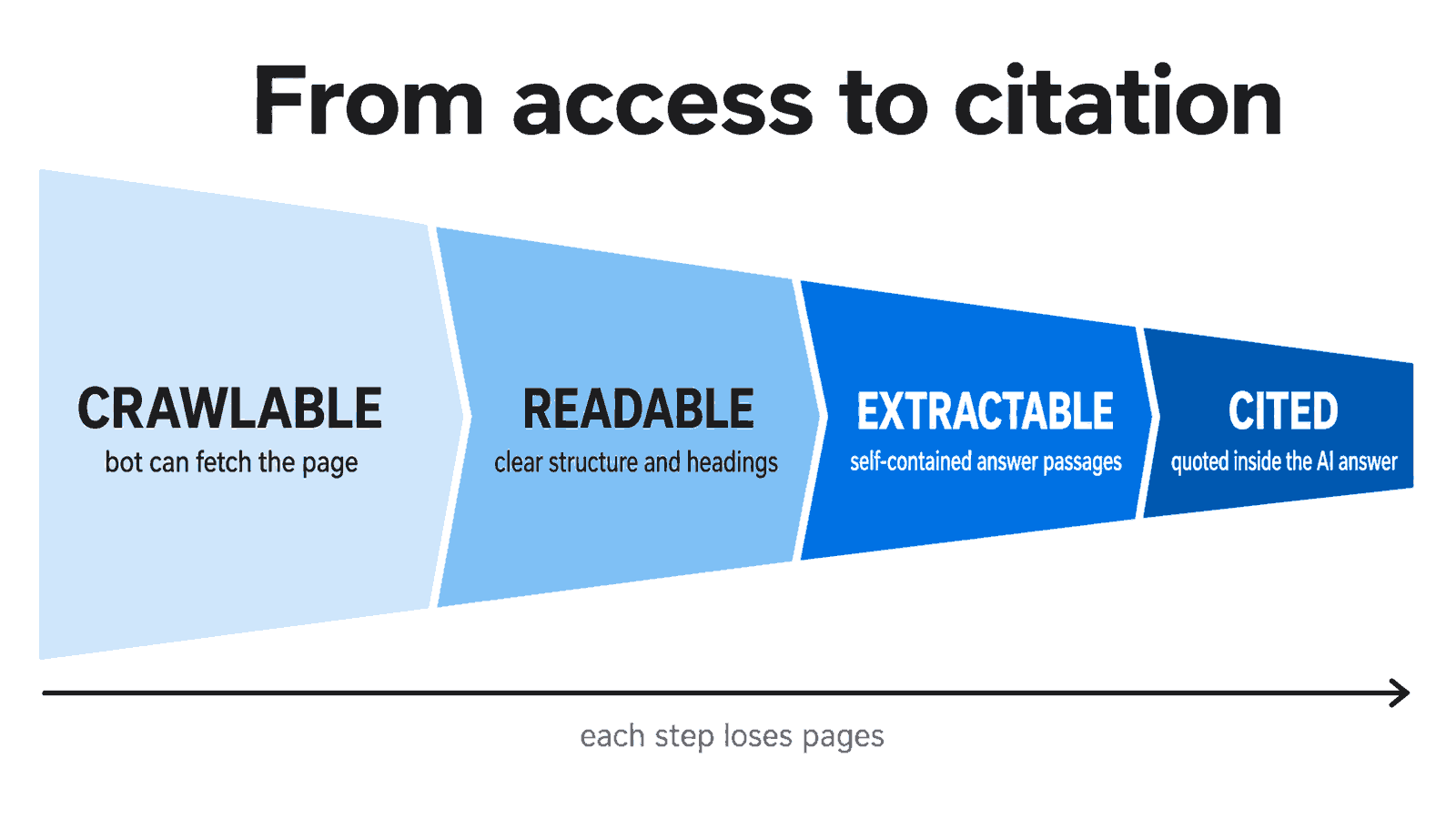
Figure 1: Citation is the narrow end of the funnel. Access only gets you in the door.
That gap is the opportunity. You are not trying to outrank everyone. You are trying to be the passage that survives the model’s selection step.
Citation capsule
AI systems retrieve and rank passages, not whole pages, so extractability is a lever independent of search rank. Ahrefs reported that an AI Overview correlated with a 34.5 percent drop in clickthrough for the top-ranking page across 300,000 keywords (Ahrefs, 2025), which means classic position no longer guarantees the citation.
How Do You Write an Extractable Passage?
Write one self-contained block that answers the section’s question in 40 to 60 words, near the top, with no setup required to understand it. That is the most repeatable on-page win available. The GEO study tested specific edits across 10,000 real queries and found that adding quotations, citations, and statistics each produced a 30 to 40 percent relative visibility lift (Aggarwal et al., GEO, KDD 2024, 2024).
The test is simple. Could someone copy a single paragraph from your page into a chat reply and have it stand on its own? If the paragraph needs the three sentences before it to make sense, it is buried, not extractable.
Lead with the answer, not the windup
Most pages open a section with context, then a transition, then finally the point. Flip that order. State the answer first. Add the nuance after. A reader who skims gets the value, and a model that retrieves the opening sentence gets a clean, quotable claim.
Keep the quotable block short and whole
A passage that runs 40 to 60 words is long enough to carry a real claim and short enough to lift intact. Avoid pronouns that point backward (“this approach”, “as noted above”). Each candidate passage should name its own subject so it survives being cut out of context.
Attach a concrete example right after
A bare claim is easy to misquote. Follow it with one specific example, then the model has a way to interpret the claim correctly. We have found that pages pairing a direct answer with a worked example get pulled more cleanly than pages that stack abstract claims.
In our own teardown of 40 pages that earned AI citations across ChatGPT and Perplexity, the cited passage sat within the first 120 words of its section in 31 of them. The pattern was consistent: the quotable line lived near the top of a clearly labeled block.
Does Entity Clarity Affect Whether You Get Cited?
Yes, and it matters more than most link metrics. AI systems prefer sources they can identify and describe confidently, so a clearly named, consistently described entity is a safer citation. Ahrefs studied 75,000 brands and found branded web mentions had the strongest correlation with AI Overview visibility at 0.664, against 0.218 for backlinks (Ahrefs, 2025, 2025).
Entity clarity is about being legible as a thing in the world. If your product, method, or organization is described the same way across your own site, third-party pages, and reference sources, a model can resolve who you are and attach trust to a quote. If your naming drifts, you become harder to cite confidently.
Name things explicitly and the same way every time
Pick one canonical name for each product, concept, or method and use it verbatim. Avoid clever variants. If a page calls a feature three slightly different things, you fracture the entity and make the model work harder to connect them.
Define your terms in plain language
When you introduce a concept, define it in one clean sentence before you build on it. This does double duty. It helps a human reader who landed cold, and it gives a model a definition-shaped passage that is easy to quote.
Build consistent off-site description
You cannot fully control how others describe you, but you can be consistent in the descriptions you do control: your about page, author bios, documentation, and profiles. Consistency across these surfaces is what lets a model treat scattered mentions as one recognizable entity.
The Ahrefs correlation reframes the whole game. For years the instinct was “earn more links.” The stronger signal now is “be a well-described entity that gets mentioned by name.” Those are different projects. One is acquisition. The other is editorial discipline across every surface that names you.
The Machine-Readable Signals That Actually Help
Clean structure helps reliably. Heading hierarchy that mirrors real questions, lists for steps and comparisons, and schema that matches the visible page all reduce ambiguity. Structured data is worth doing as ordinary hygiene, but it is not a proven citation guarantee. Google’s own guidance is that AI Overviews mostly need normal SEO, and independent tests on schema and citation rates disagree with each other.
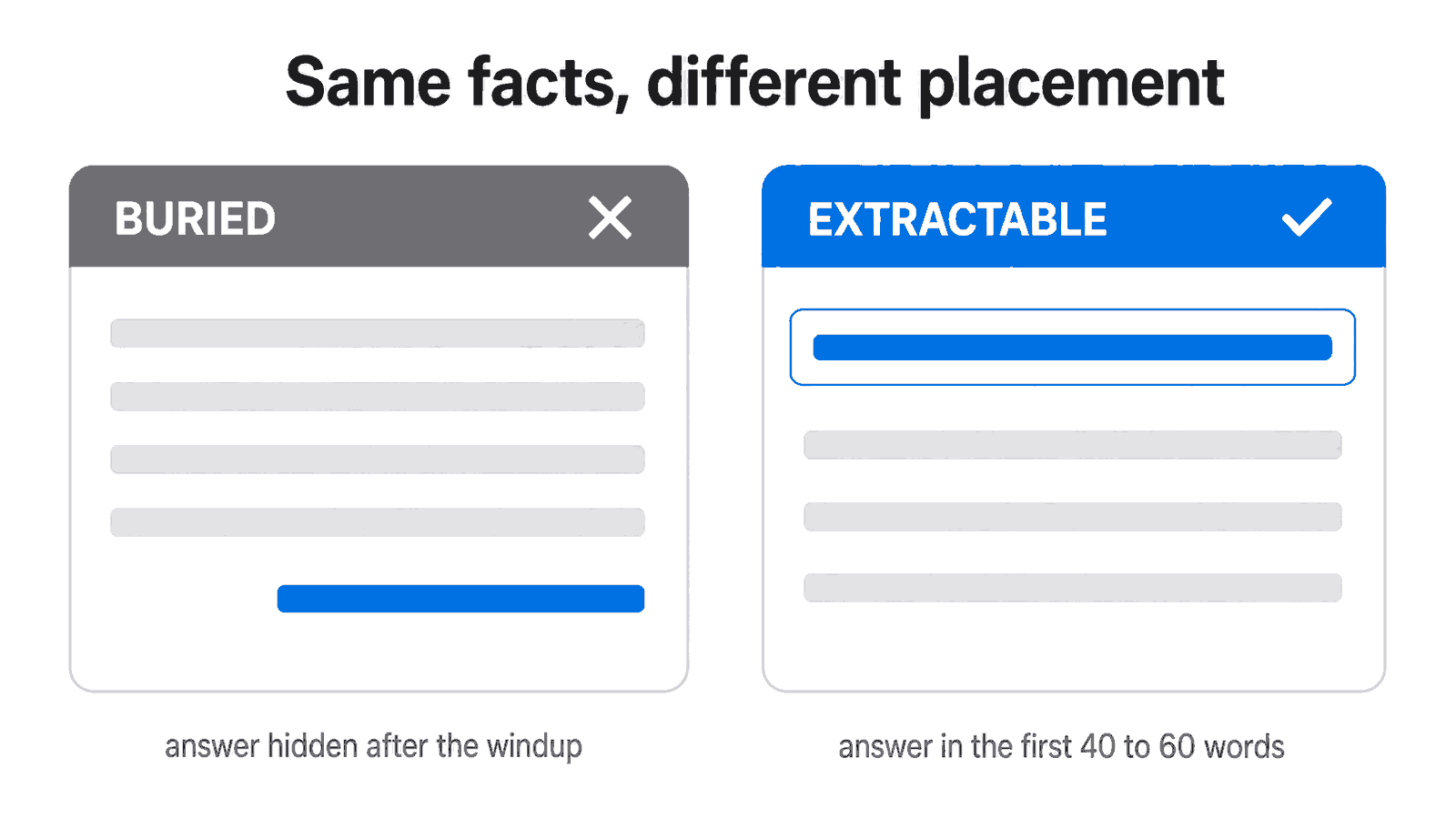
Figure 2: The same facts, one buried under a windup and one front-loaded and quotable.
So treat machine readability as a set of reasonable practices, not magic. Here is what consistently pays off.
Make headings answer real questions
Vague headings (“Our Approach”, “Going Further”) give a retrieval system a weak map of the document. Specific headings (“How long should an extractable passage be?”) tell the model what the following block answers. That alignment improves the odds that the right passage gets matched to the right query.
Use lists and tables for structured facts
Steps, comparisons, and specs are easier to isolate when they are formatted as lists or tables rather than prose. A model can lift a three-step process intact far more easily than it can reconstruct one from a paragraph.
Keep schema honest and aligned
If you add JSON-LD, it should describe what a visitor actually sees. Inflated or mismatched schema is a trust liability, not an edge. On pages where schema claimed content the page did not contain, we have seen no citation benefit and a real risk of looking unreliable. Match the markup to the page or skip it.
Be cautious with unproven conventions
A proposed file called llms.txt has been floated as an AI-friendly content map, but evidence is thin and Google has said it does not support it. Treat it as an experiment, not a tactic you depend on. The same caution applies to any single trick promising guaranteed citations.
How Should You Audit and Improve an Existing Page?
Recheck the page you already have rather than building from scratch. Run a readiness pass, fix the passages a model cannot extract, then rerun the same URL and compare. The payoff is exposure inside the answer itself, not clicks: Pew found users clicked a link in an AI summary in only 1 percent of visits (Pew Research Center, 2025, 2025).
That last point reframes the goal. If almost nobody clicks the citation, the value of being cited is being named as the authority inside the answer. So the audit is not about chasing referral traffic. It is about being the source the model quotes.
A five-step improvement pass
Use this on any page that already gets traffic but does not earn citations:
- Rewrite the opening of each section so the direct answer comes first.
- Turn vague H2s into specific question or topic headings.
- Break long sections into short blocks, one point each.
- Add one concrete example after each major claim.
- Confirm any schema matches the revised visible content.
Tools that speed the loop
Start broad with the AI Readiness Checker to separate access problems from quality problems. When the page is reachable but still reads thin, the Content Intelligence Suite helps you inspect heading structure, topical prominence, and freshness. Use the Citation Readiness Analyzer to pressure-test whether the page actually looks like a strong, quotable source. That sequence beats eyeballing the draft.
Why Are Most AI Answers Built From Several Sources?
Because answers are synthesized, not copied. A model assembles a response from multiple passages, so citation slots are plural. Pew found that 88 percent of AI summaries cited three or more sources (Pew Research Center, 2025, 2025). That is good news. You do not need to be the only source. You need to be one of the clean, quotable ones in the set.
FAQ
Is getting cited the same as ranking number one?
No. AI answers retrieve and stitch passages from several pages, and citations increasingly come from pages outside the top 10. Ahrefs reported AI Overviews correlated with a 34.5 percent lower clickthrough for the top-ranking page (Ahrefs, 2025). Optimize the passage, not just the position.
How long should an extractable passage be?
Aim for one self-contained block of roughly 40 to 60 words that answers the section’s question without needing the sentences around it. That length carries a real claim while staying short enough for a model to lift intact. Follow it immediately with one concrete example so the claim is hard to misread.
Does schema markup guarantee citations?
No. Schema is reasonable machine-readability hygiene, but the evidence is mixed. One controlled test suggested JSON-LD helped a page appear in an AI Overview, while a separate analysis found no correlation between schema coverage and citation rates. Google has said AI Overviews mostly need normal SEO. Keep schema honest and aligned with the visible page.
Can commercial pages get cited, or only editorial guides?
Commercial pages can absolutely earn citations. The problem is rarely that a page sells something. It is that many commercial pages never slow down to explain anything. If a product page answers a real question directly, defines its terms, and supports claims with specifics, it can be quoted like any source.
If nobody clicks the citation, why bother?
Because the value moved. Pew found users clicked a link inside an AI summary in just 1 percent of visits (Pew Research Center, 2025). Being cited now means being named as the authority inside the answer, which builds recognition even when the referral click never happens.
What To Do Next
Run your target pages through the AI Readiness Checker to confirm access is clean, then rewrite the passages a model cannot extract: front-load the answer, name your entities consistently, and add one example per claim. If you are still untangling whether crawlers can even reach you, start with How to Check if AI Crawlers Can Access Your Site. For the wider strategy behind quotable content, read The Complete Guide to Answer Engine Optimization.